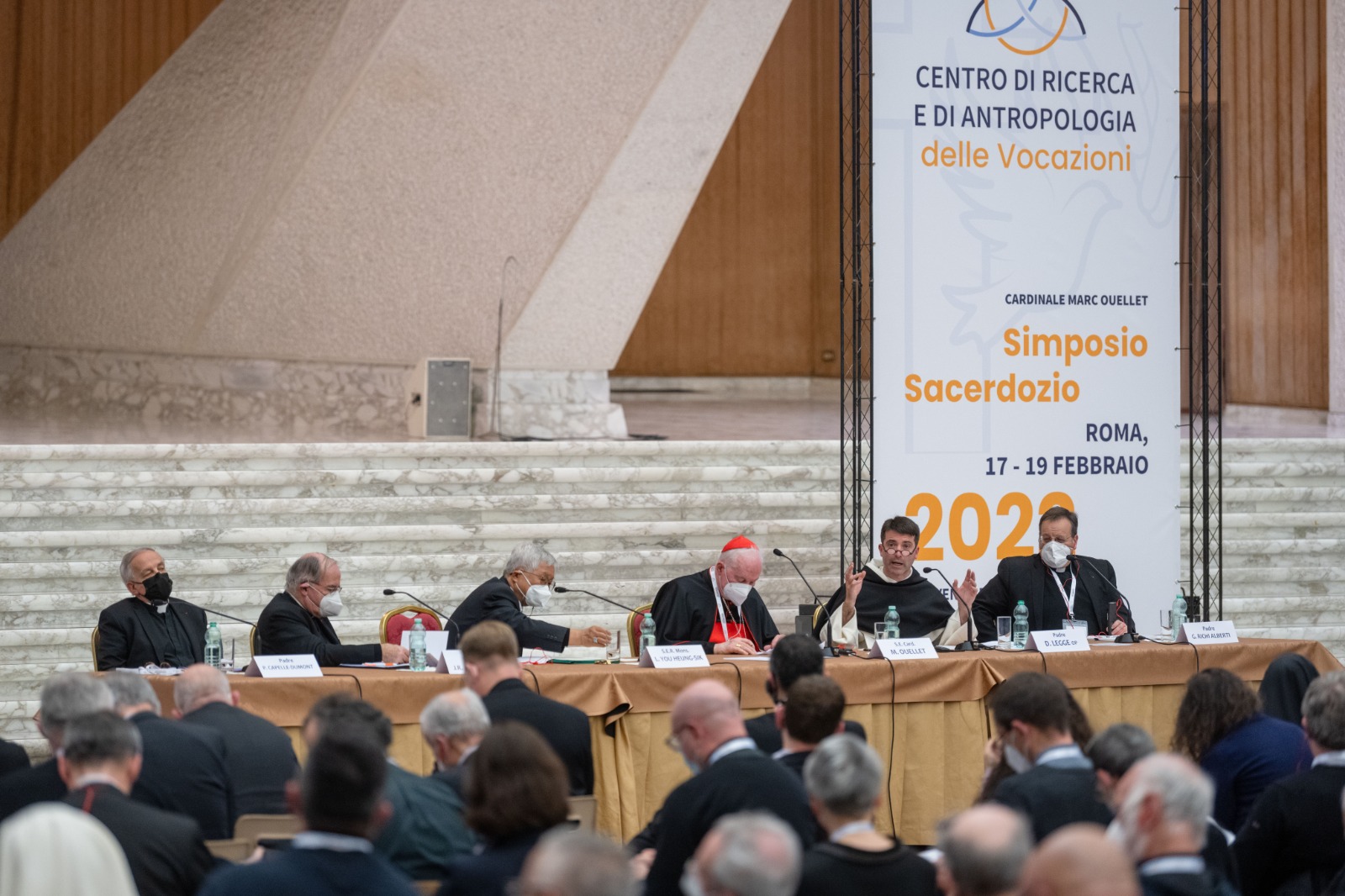
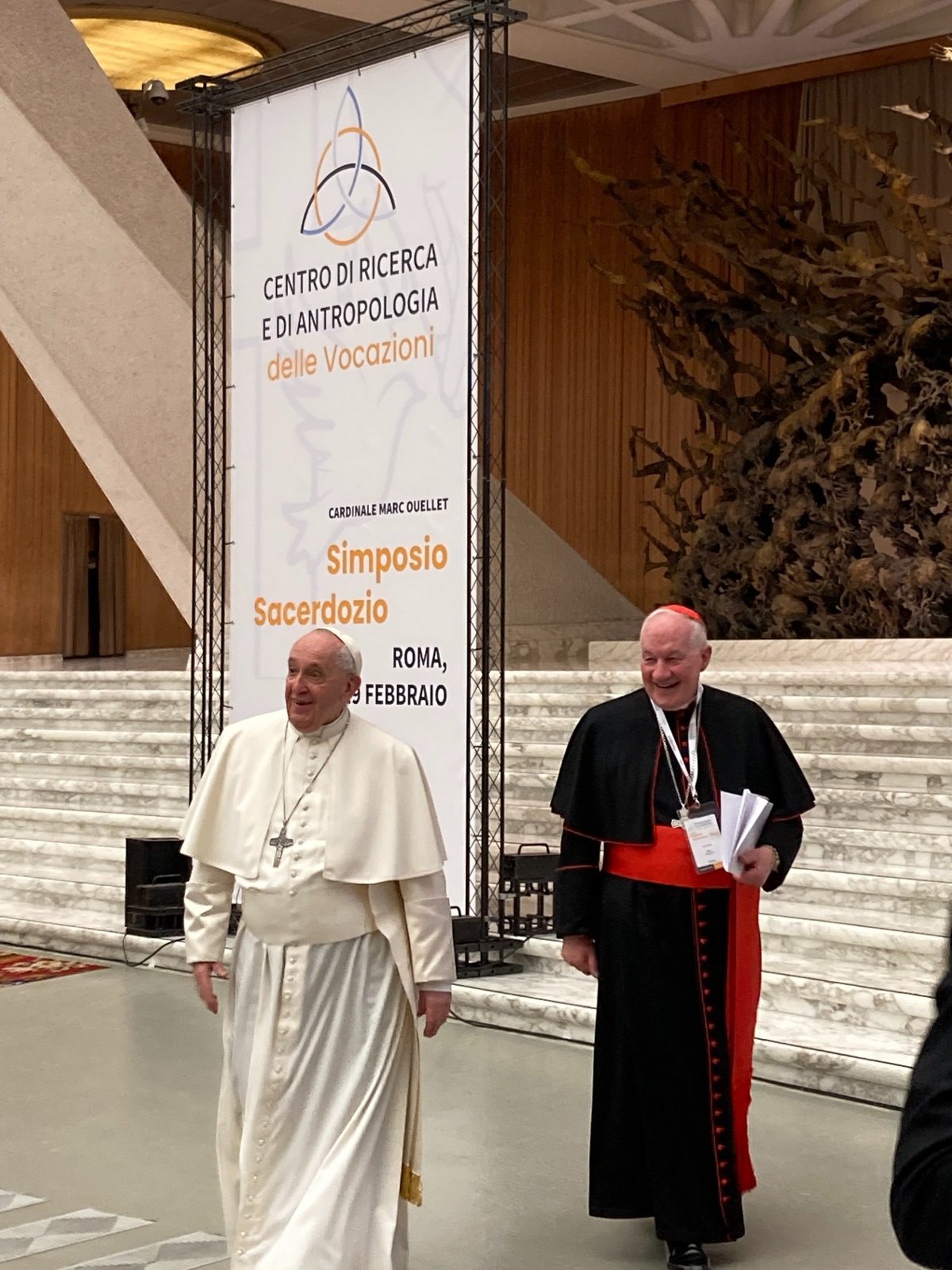
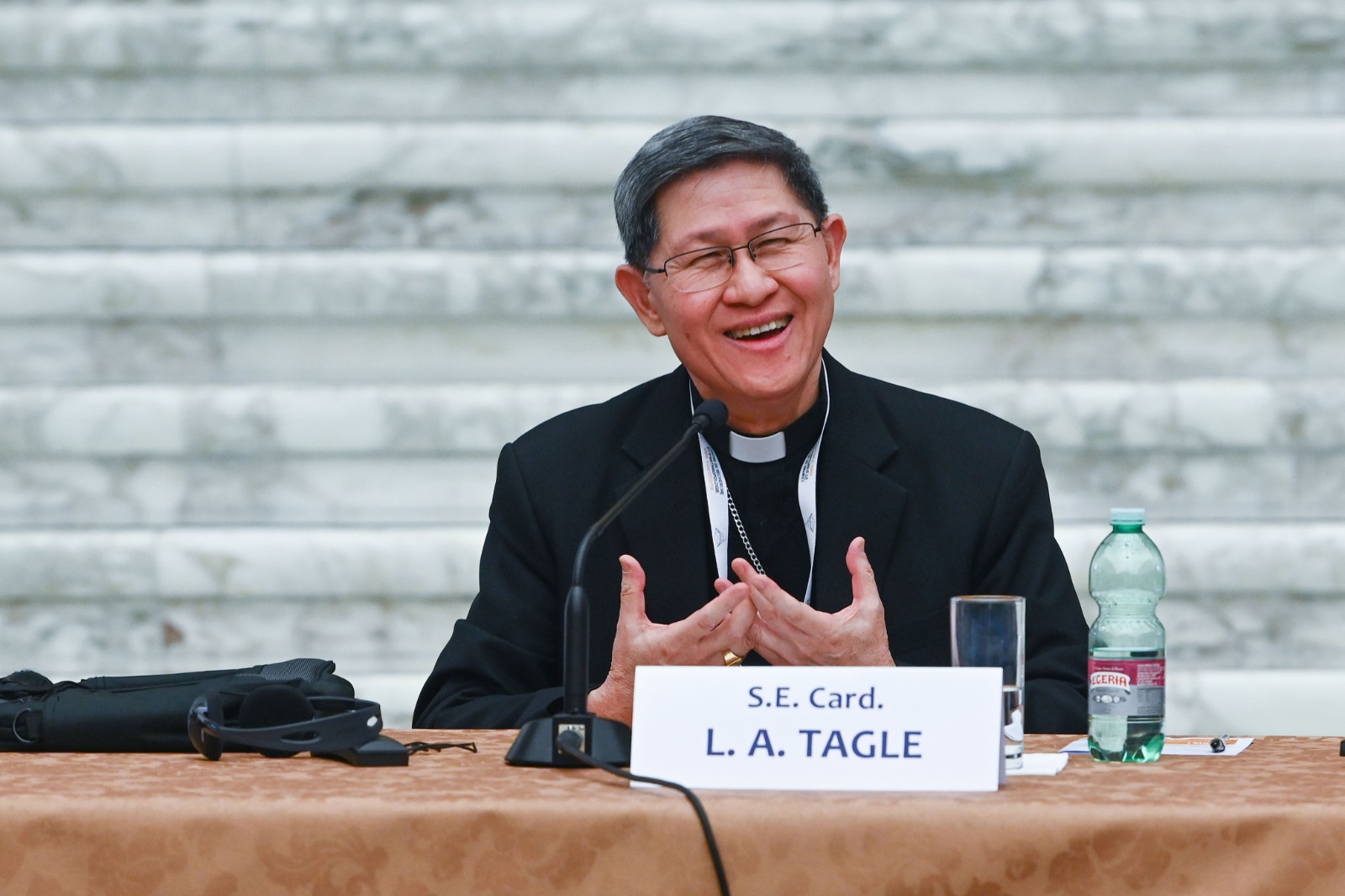
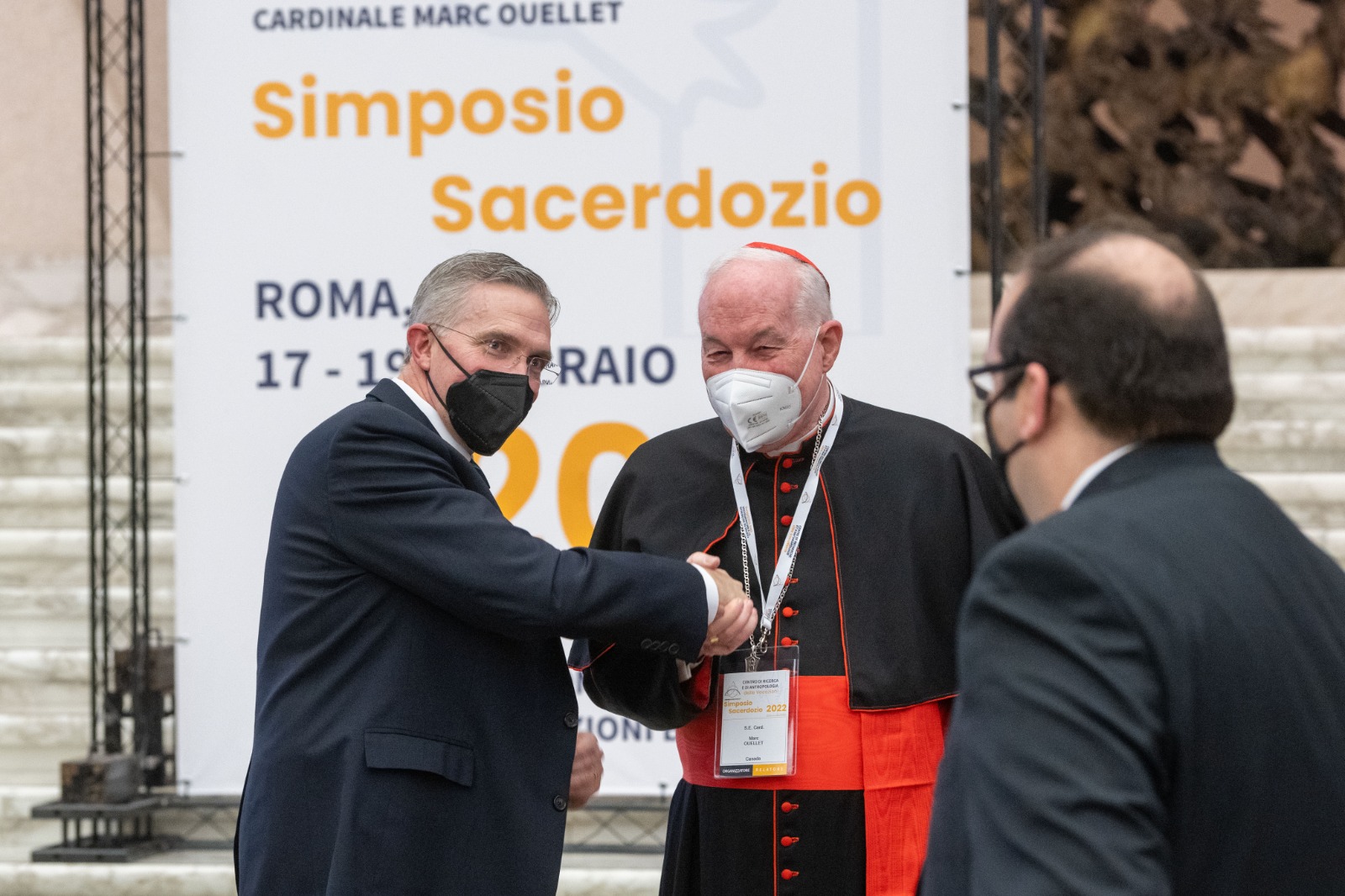
Relive the 2024 symposium
DEAR POPE FRANCIS
On behalf of all those present and all those following online, I welcome you and thank you from the bottom of my heart for being Peter among us and for having accepted Christ’s call to govern His Church. Peace to you, Holy Father, and peace to the people of God on the journey. May the Lord’s grace be our light and our strength!
A famous theologian says, perhaps jokingly, that there are two categories of canonized saints: those the Church asks God to canonize and those the Lord sends to reform her, who are recognized only after a possible crucifixion. If this distinction were applied to Pontiffs, you know which category you would belong to!
It is no accident that I allude to your particular Petrine charism, Holy Father, for you come from the charismatic sphere of the Church and you undergo, to a certain extent, the fate reserved for charisms in the Church, even in our time. Vatican II marked a real liberation in this domain and we have seen a great number of different charisms flourish over recent decades, even though the mindset of many and canon law are not yet equal to this sign of the times. Whic leads, alas, to sad consequences for vocations.
I appeal to Your Holiness and to all your delegates that charisms be accompanied, to guarantee genuine dialogue and mechanisms for resolving possible differences in applying the new regulations that are necessary. To safeguard the precious gift of vocations arising from this milieu, we must avoid a rigid application of the law at the expense of the diversity of charisms, which is sometimes a source of misunderstanding, bitterness and even scandal.
Dear Holy Father, since the beginnings of this initiative on vocations more than three years ago, you have shown firm encouragement, even proposing to take part in this Symposium on the Anthropology of vocations, as you did for that of February 2022 on the Priesthood. We need your Petrine-Ignatian-Franciscan charism to steer this assembly toward missionary and synodal objectives suited to our changing era. Thank you for offering us a word of orientation and pastoral wisdom.
The theme Man-Woman, image of God, was chosen to reflect on the anthropological foundations of life as vocation, in the hope of fostering a renewed appropriation of the constitutive truths of our human and baptismal identity. We Christians are aware that we bear witness to the world of a filial and fraternal grace intended for all, which we wish to share with everyone, in the spirit of the Abu Dhabi Declaration and the encyclical Fratelli Tutti. Your Holiness has made the theme of universal fraternity a path to follow for proclaiming Jesus Christ, the only Son of the Father and therefore universal brother, without any exclusion. We share this missionary approach and offer our humble witness in often secularized and hostile milieux; this situation, far from discouraging us, pushes us all the more to manifest our passion for the Gospel.
Dear Holy Father, guided by your enlightened and courageous pastoral action, we gather here in a synodal spirit to be with you a Church of listening and proclamation for our world thirsting for Peace. We will listen to the Word of God while paying attention to current anthropological questions. We will seek to align our life and our culture with the vocation to divine likeness that comes to us from the Holy Spirit through the Word and the witnesses of the Christian tradition. We invoke the intercession of the Mother of Mercy so that these works of research and sharing may foster a new vocational culture attentive to charisms and engaged in their integration into the synodal and missionary reform of the Church.
Marc Cardinal Ouellet
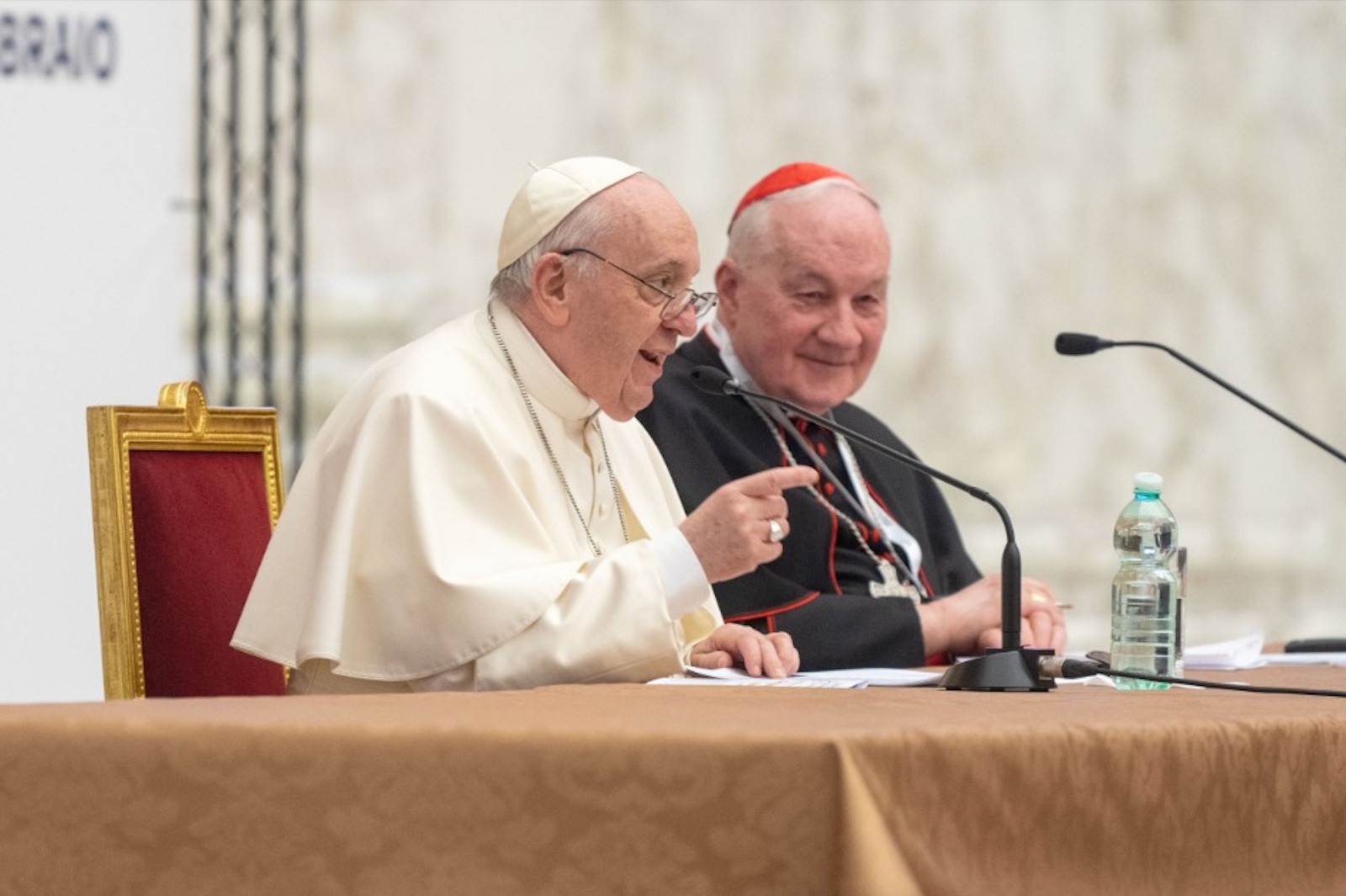
Address of Pope Francis to participants in the international conference “Man-Woman: Image of God. Towards an Anthropology of Vocations”
Synod Hall – Friday, 1 March 2024
Words of introduction spoken by the Holy Father
Good morning! I will ask for my address to be read, so I don’t get too tired; I still have a cold and I get tired reading for a while. But I would like to highlight something: it is very important for there to be this encounter, this encounter between men and women, because today the worst danger is gender ideology, which cancels out differences. I asked for studies to be made on this ugly ideology of our time, which erases differences and makes everything the same; to erase difference is to erase humanity. Man and woman, on the other hand, stand in fruitful “tension”. I remember reading a novel from the early 1900s, written by the son of the Archbishop of Canterbury: The Lord of the World. The novel speaks of the futuristic and it is prophetic, because it shows this tendency to erase all differences. It is interesting to read it, if you have time, because there are these problems of today; that man was a prophet.
Reading of the Holy Father’s address
Brothers and sisters!
I am pleased to participate in this Conference organized by the Centre for Research and Anthropology of Vocations, during which scholars from various parts of the world, each with his or her own expertise, will discuss the theme “Man-Woman: Image of God. Towards an anthropology of vocations”. I greet all the participants and thank Cardinal Ouellet for his words: we are not yet saints, but we hope to be always on the way to becoming one — this is the first vocation we have received! And thank you above all because, a few years ago, together with other influential people and seeking an alliance of knowledge, you set up this Centre to initiate international academic research aimed at an ever better understanding of the meaning and importance of vocations, in the Church and in society.
The purpose of this Conference is first and foremost to consider and value the anthropological dimension of every vocation. This refers us to an elementary and fundamental truth, which we need to rediscover in all its beauty: the life of the human being is a vocation. Let us not forget this: the anthropological dimension, which underlies every calling within the community, is associated with an essential characteristic of the human being as such: namely, that man himself is a vocation. Every one of us, both in the big decisions regarding a state of life, and in the numerous occasions and situations in which these are embodied and take shape, discovers and expresses him- or herself as one who is called, as a person who is realized in listening and answering, sharing one’s own being and one’s own gifts with others for the common good.
This discovery makes us come out from the isolation of a self-referential ego, and it makes us look at ourselves as a relational identity: I exist and live in relation to those who generated me, to the reality that transcends me, to others and to the world that surrounds me, with respect to which I am called to embrace a specific and personal mission with joy and responsibility.
This anthropological truth is fundamental because it responds fully to the desire for human realization and happiness that dwells in our heart. In today’s cultural context, at times this reality tends to be forgotten or obscured, with the risk of reducing the human being to his or her material needs or primary requirements alone, as if he or she were an object without conscience or will, simply swept along by life as part of a mechanical gear. Instead, man and woman are created by God and are the image of the Creator; that is, they carry within themselves a desire for eternity and happiness that God Himself has sown in their hearts, and which they are called to realize through a specific vocation. Therefore, a healthy inner tension dwells within us, which we must never stifle: we are called to happiness, to the fullness of life, to something great to which God has destined us. The life of each one of us, no-one excluded, is not incidental; our being in the world is not merely the fruit of chance, but rather we are part of a plan of love and are invited to come out of ourselves and fulfill it, for ourselves and for others.
For this reason, if it is true that each one of us has a mission, namely to offer one’s own contribution to improve the world and forge society, I like always to remember that it is not an external task entrusted to our lives, but a dimension that involves our very nature, the structure of our being man-woman in the image and semblance of God. Not only has a mission been entrusted to us, but each one of us is a mission: “I am a mission, always; you are a mission, always; every baptized man and woman is a mission. People in love never stand still: they are drawn out of themselves; they are attracted and attract others in turn; they give themselves to others and build relationships that are life-giving. As far as God’s love is concerned, no one is useless or insignificant” (Message for World Mission Day 2019).
An eminent intellectual and spiritual figure, Cardinal Newman, has illuminating words on this. I quote some of them: “I am created to do something or to be something for which no one else is created; I have a place in God’s counsels, in God’s world, which no one else has; whether I be rich or poor, despised or esteemed by man, God knows me and calls me by my name. God has created me to do Him some definite purpose; He has committed some work to me which He has not committed to another. I have my mission… Somehow I am necessary for His purposes”. And he continues: “[God] has not created me for naught. I shall do good, I shall do His work; I shall be an angel of peace, a preacher of truth in my own place, while not intending it, if I do but keep His commandments and serve Him in my calling” (J. H. Newman, Meditations and Devotions).
Brothers and sisters, your research, your studies and in particular these opportunities for exchange are so necessary and important, in order to spread awareness of the vocation to which every human being is called by God, in various states of life and thanks to his or her many charisms. They are equally useful for questioning today’s challenges, the current anthropological crisis and the necessary promotion of human and Christian vocations. And it is important that an increasingly effective circularity between the various vocations be developed, also thanks to your contribution, so that the works that flow from the lay state of life in the service of society and the Church, together with the gift of the ordained ministry and consecrated life, may contribute to generating hope in a world over which heavy experiences of death loom.
Generating this hope, placing oneself in the service of the Kingdom of God for the construction of an open and fraternal world is a task entrusted to every man and woman of our time. Thank you for the contribution you give in this regard. Thank you for your work in these days. I entrust it to the Lord in prayer, by the intercession of Mary, Icon of the vocation and Mother of every vocation. And please, you too, do not forget to pray for me.
Words of the Holy Father at the end of the reading of the address
I wish you all the best in your work! And do not be afraid of these rich moments in the life of the Church. The Holy Spirit asks something important of us: fidelity. But fidelity requires motion, and fidelity often leads to taking risks. “Museum fidelity” is not fidelity. Go forward with the courage to discern and to risk, in search of God’s will. I wish you the best. Take courage and keep going, without losing your sense of humour!